

Pulp Tray Machine


What is Pulp Tray Machine?
Pulp molding machine recycles waste paper into egg trays, egg cartons, cup holders, seedling trays, fruit trays, etc. It can be customized according to your needs.
Why Choose Us
Professional Team
The members of the team are highly skilled and proficient in their respective roles and possess the necessary education, training, and experience to excel in their jobs.
Service
If you find any problems with the product after receiving it, you can also contact us in a timely manner. We will respond promptly and provide appropriate and reasonable solutions.
Quality Assurance
We provide rigorous professional technicians for each production line to ensure that products meet standards.
Technical Support
Our team of experts is available to assist with troubleshooting, answer technical inquiries, and provide guidance.
Pulp moulded products are more and more widely used
At present, pulp moulded products made of reeds, straw husks, sugarcane, wheat straw, bamboo, wood are more and more widely used in protective packaging of electronic products, household appliances, instrumentation, glass-ceramic paper products, small machinery, as well as retail packaging of high-quality paper and plastic products for consumer goods. So what are the characteristics of pulp moulded products?
The characteristics of pulp moulded products
● Various specifications and shapes can be produced through the mold to meet diverse packaging requirements. Moreover, it is easy to prevent collisions of products.
● With light and soft paper, it has good strength and rigidity, which makes it good at protection and cushioning.
● Ideal aeration and moisture absorption are conducive to food preservation. As long as an appropriate amount of waterproofing agent is added to the pulp, the pulp moulded products can be water resistant. For example, egg racks and fruit racks can be filled with water not exceeding 35 degrees Celsius within 24 hours, and there will be no water stains on the reverse side. However, this property is not required in industry packaging as it should be used for storage, transportation and external packaging requirements.
● According to needs, pulp moulded products can be flame-retardant, anti-static, waterproof, laminating, printing, and can be used in retail packaging terminals.
● In terms of protective packaging, molded pulp products have more advantages than EPS, EPE and EPP buffers.
A. The raw materials of pulp moulded products are waste paper and various fiber materials from paper mills. They have a wide range of sources and are easy to collect. While as foam plastics come from petroleum products, resource depletion and price problems will become more and more serious.
B. Basically, pulp moulded products can be used as lining products instead of foam plastics. It occupies less storage space and has lower transportation and storage costs.
C. The friction of foam plastic is prone to generate static electricity, and the use of pulp molded product packaging can play a better role in protecting electronic products and household appliances.
D. The moisture of the food packaged by plastic products is not easy to volatilize, which makes it easy to decay, and the molded pulp products have water permeability and air permeability, which can achieve anti-corrosion effect.
● The raw materials are widely used and can be used as waste, with obvious social benefits and higher recycling rate. Both waste and finished products in production can be used as raw materials for remanufacturing.
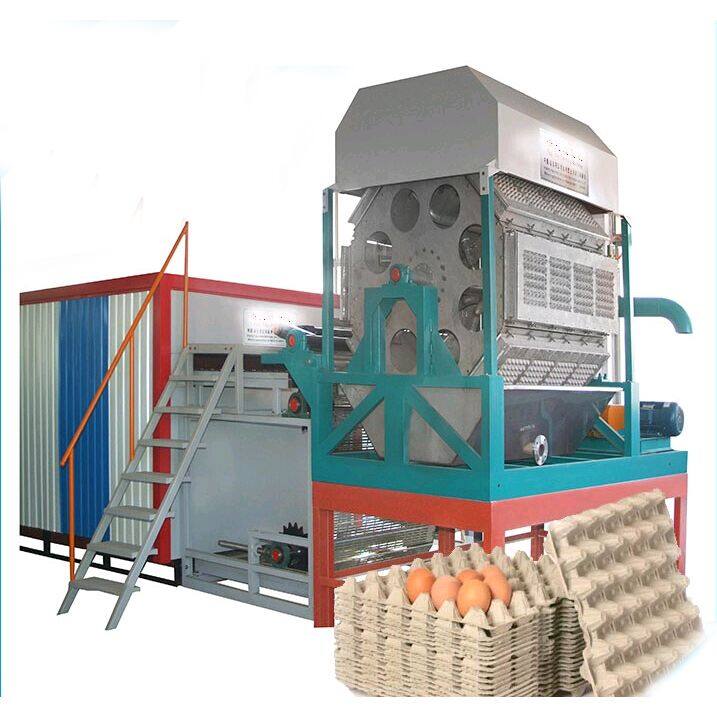
The components of an egg tray pulp moulding machine include a pulper, a molding system, a drying system, and a control system. The pulper is used to create pulp by mixing recycled paper with water. The molding system shapes the pulp into egg trays using moulds of different sizes and shapes. The drying system is used to dry the trays, and the control system is used to manage and monitor the entire process.
There are two main types of egg tray pulp moulding machines available in the market: manual and automatic. Manual machines are operated manually and are suitable for small-scale egg tray production, while automatic machines are designed for large-scale production. Automatic machines are more efficient and productive than manual machines and can produce up to 7000-8000 egg trays per hour.
Rotary egg tray pulp moulding machines and reciprocating egg tray pulp moulding machines are the two main types of automatic egg tray pulp moulding machines available in the market.
Rotary egg tray pulp moulding machines use a rotary forming drum to shape the pulp into egg trays. The pulp is fed into the forming drum, and as the drum rotates, the pulp is formed into trays using pre-designed moulds. These machines are highly efficient and can produce up to 8000 egg trays per hour.
Reciprocating egg tray pulp moulding machines, on the other hand, use a reciprocating forming system to shape the pulp into egg trays. The pulp is fed into the forming system, and as it moves back and forth, it is formed into trays using pre-designed moulds. These machines are also highly efficient and can produce up to 7000 egg trays per hour.
When comparing rotary and reciprocating egg tray pulp moulding machines, it's essential to consider their pros and cons. Rotary machines are more productive, but they are more expensive and require more space. Reciprocating machines, on the other hand, are less expensive and require less space, but they are less productive than rotary machines.
Egg trays are essential for the safe transportation and storage of eggs. They protect the eggs from damage and ensure that they remain fresh until they reach the consumer. Traditionally, egg trays were made from plastic or Styrofoam, which are harmful to the environment. However, with the development of technology, paper egg trays have become a popular alternative.
Increased Production Efficiency
Using a paper egg tray making machine leads to increased production efficiency in several ways. Firstly, the automated production process reduces labor costs by eliminating the need for manual labor. Secondly, the machine has a large production capacity, allowing producers to create large quantities of egg trays quickly and efficiently. Thirdly, the quick turnaround time of the machine reduces production time and improves efficiency.
Automated Production Process
The automated production process of a paper egg tray making machine eliminates the need for manual labor, making the production process more efficient and cost-effective. The machine automates several processes, including pulp preparation, forming, drying, and packing, reducing production time and increasing efficiency.
Large Production Capacity
Paper egg tray making machines have a large production capacity, allowing producers to create a large number of egg trays in a short amount of time. The capacity of the machine depends on the model, but most machines can produce up to 6000 trays per hour.
Reduced Labor Costs
Using a paper egg tray making machine reduces labor costs by eliminating the need for manual labor. The machine automates several processes, including pulp preparation, forming, drying, and packing, reducing the number of workers needed to operate the machine.
Quick Turnaround Time
The quick turnaround time of a paper egg tray making machine reduces production time and improves efficiency. The machine can produce large quantities of egg trays quickly, allowing producers to meet their production targets and deadlines.
Cost-Effective Solution
Using a paper egg tray making machine is a cost-effective solution for egg producers. The machine has a low initial investment, minimal maintenance costs, reduced material costs, and a high return on investment.
Low Initial Investment
Compared to other egg tray production methods, using a paper egg tray making machine has a low initial investment. The cost of the machine depends on the model, but most machines have a relatively low cost, making it an affordable option for small and medium-sized producers.
Minimal Maintenance Costs
Paper egg tray making machines have minimal maintenance costs. The machines are built to be durable and require minimal maintenance. Regular cleaning and inspection of the machine can help prolong its lifespan.
Reduced Material Costs
Using a paper egg tray making machine reduces material costs by using recycled paper as the main raw material. The use of recycled paper not only reduces the cost of raw materials but also reduces waste and promotes sustainability.
High Return on Investment
Using a paper egg tray making machine has a high return on investment. The low initial investment, minimal maintenance costs, and reduced material costs, coupled with the high production capacity, make the machine a profitable investment for egg producers.
Sustainable and Eco-Friendly
Using a paper egg tray making machine promotes sustainability and eco-friendliness. The machine produces biodegradable and compostable egg trays, reduces plastic waste, fosters sustainable practices, and meets environmental standards.
Biodegradable and Compostable
Paper egg trays produced by the machine are biodegradable and compostable, meaning they can be broken down naturally and do not harm the environment. The use of biodegradable and compostable egg trays reduces waste and promotes sustainability.
When choosing an egg tray pulp moulding machine, several factors need to be considered to ensure optimal production output and efficiency. Here are some critical factors to consider:
Production capacity: The production capacity of the machine is crucial in determining the amount of egg trays it can produce in a given time. It's essential to choose a machine with a production capacity that meets your business needs.
Automation level: Automatic machines are more efficient and productive than manual machines. However, they are more expensive. Therefore, it's crucial to consider the level of automation needed to meet your production needs.
Power consumption: The power consumption of the machine determines its operational costs. It's essential to choose a machine with low power consumption to reduce operating costs.
Quality of output: The quality of the egg trays produced by the machine is crucial in determining customer satisfaction. Choose a machine that produces high-quality egg trays that meet industry standards.
Reliability: The reliability of the machine is essential in ensuring smooth production. Choose a machine that is known for its reliability and minimal downtime.
Cost and maintenance: The cost of the machine and its maintenance requirements should be considered to ensure that they fit within your budget. Choose a machine that is cost-effective in the long run.
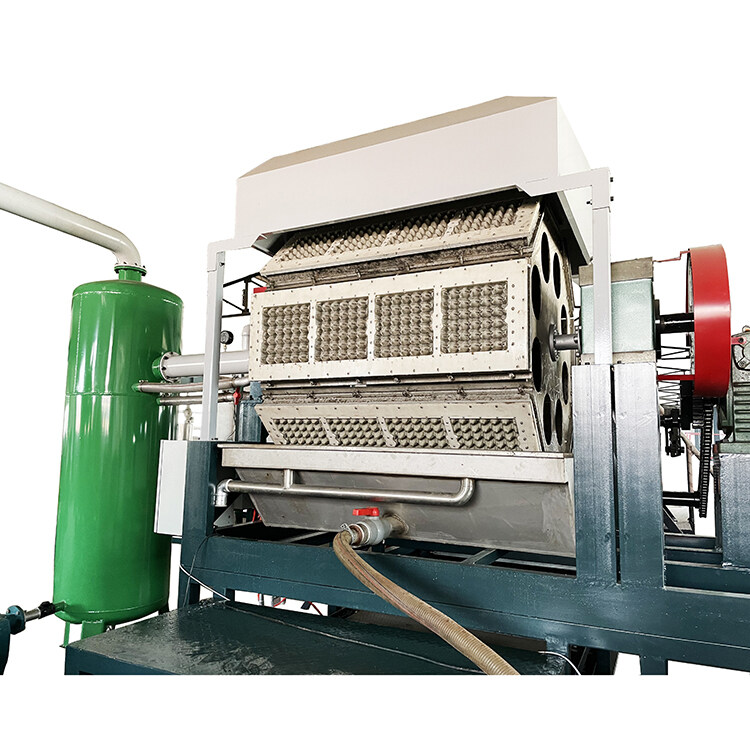
Pulp trays have become increasingly popular in recent years as a sustainable packaging solution. Made from renewable materials, pulp trays are eco-friendly alternatives to plastic packaging. In this comprehensive guide, we will dive into the details of the pulp tray manufacturing process and provide you with a complete understanding of the process.
Pulp trays, also known as molded pulp trays, are packaging solutions made from recycled paper and cardboard. They are used to package a wide range of products, including electronics, food items, and fragile items such as glassware. Pulp trays are customizable and can be designed to fit the specific shape and size of the product.
The use of pulp trays in packaging has several benefits. Firstly, they are sustainable and eco-friendly, as they are made from recycled materials and are biodegradable. Secondly, they provide excellent protection for products during transportation and storage, as they absorb shocks and vibrations. Finally, they are cost-effective, as they are often cheaper than plastic alternatives.
Overview of the Pulp Tray Manufacturing Process
The pulp tray manufacturing process involves several steps. Firstly, recycled paper and cardboard are shredded into small pieces and mixed with water to create a pulp. Secondly, the pulp is poured into a mold and pressed to remove excess water. Finally, the molded pulp is dried and trimmed to the desired size and shape.
Raw Materials
The type of pulp used in tray making can greatly affect the properties and suitability of the final product. There are two main types of pulp used in tray making: virgin pulp and recycled pulp.
Virgin pulp is made from wood fibers that have been chemically or mechanically processed. This type of pulp is often used in the production of high-quality trays as it has a consistent fiber length and strength. However, the production of virgin pulp requires the use of large amounts of water and chemicals, making it less environmentally friendly than recycled pulp.
Recycled pulp, on the other hand, is made from paper and cardboard waste that has been processed and re-pulped. This type of pulp is more sustainable as it reduces waste and requires less water and chemicals to produce. However, the quality of the recycled pulp can vary depending on the type and quality of the paper and cardboard used.
The properties of each pulp type can also affect the suitability of the final product. Virgin pulp tends to have higher strength and stiffness, making it suitable for products that require more protection, such as electronics. Recycled pulp, on the other hand, tends to be softer and more flexible, making it suitable for products that require a more cushioned packaging, such as food items.
Proper preparation and storage of raw materials is also important in ensuring the quality of the final product. Raw materials should be stored in a dry and clean environment to prevent contamination and moisture damage. The materials should also be processed and mixed thoroughly to ensure consistency in the pulp mixture.
Pulping Process
The pulping process is a key step in the manufacturing of pulp trays. The pulping process involves separating the fibers of the raw material and creating a pulp that can be molded into the desired shape.
There are several types of pulping techniques, including mechanical pulping, chemical pulping, and semi-chemical pulping. Mechanical pulping involves grinding the raw material to separate the fibers, while chemical pulping involves using chemicals to break down the fibers. Semi-chemical pulping involves a combination of both mechanical and chemical methods.
Each pulping method has its advantages and disadvantages. Mechanical pulping is fast and cost-effective but can result in a lower quality pulp. Chemical pulping produces a higher quality pulp but is more expensive and can be less environmentally friendly. Semi-chemical pulping offers a balance between the two but can be more complex and time-consuming.
When choosing a pulping method, several factors should be considered, such as the desired quality of the final product, the cost, and the environmental impact. The type and quality of raw materials should also be taken into account when choosing a pulping method.
Pulp Molding Process
Once the pulp mixture has been prepared, the next step in the pulp tray manufacturing process is the molding process. The molding process involves shaping the pulp mixture into the desired form using a molding machine.
There are several types of molding machines used in pulp tray manufacturing, including reciprocating, rotary, and single- and multi-sided machines. Each type of machine has its advantages and disadvantages, and the choice of machine will depend on the desired tray shape, production volume, and cost.
The molding process begins with the pulp mixture being poured into the molding machine. The machine then shapes the pulp mixture into the desired form using a mold or tool. Factors to consider when choosing a molding machine include the shape and size of the desired tray, the production volume, and the cost of the machine.
Techniques such as controlling the shape, thickness, and quality of the pulp trays can be achieved through the use of specialized molding techniques. These techniques can include using multi-layered molds to create trays with varying thicknesses or using custom molds to create trays with specific shapes.
Drying and Finishing
Once the pulp trays have been molded into the desired shape, the next step is the drying process. The drying process involves removing the excess moisture from the trays to improve their strength and stability.
There are several types of drying techniques used in pulp tray manufacturing, including natural air-drying, thermal drying, and microwave drying. Each drying method has its advantages and disadvantages, and the choice of method will depend on the production volume, cost, and desired quality of the trays.
After the trays have been dried, finishing techniques may be applied to improve the quality and appearance of the trays. Finishing techniques can include trimming excess pulp, smoothing rough edges, and applying coatings or labels. Quality control is important during the drying and finishing process to ensure that the trays meet the desired specifications and standards.
Packaging and Shipping
After the pulp trays have been manufactured and finished, the next step is packaging and shipping. Proper packaging and labeling of the trays are essential to ensure they are protected during shipping and handling.
Pulp trays can be packaged in various ways, including stacking them in boxes, wrapping them in plastic, or using shrink wrap. It's important to label the trays with information such as the product name, quantity, and any handling instructions.
During shipping, pulp trays can be subject to damage if not handled carefully. To minimize damage, it's essential to package them securely, use appropriate cushioning materials, and label them as fragile. It's also important to choose reliable shipping partners who have experience in handling fragile items.
Our Factory
Longkou Zhichuang Machanical Equipment Co. , Ltd.was founded in 1994, is a professional manufacturers which produce egg tray machine,EPE foam sheet machine,fruit net machine ......, After years of development. Now become an advanced packing machine production enterprise which has advanced technology and powerful strength . The foam fruit net production line, knotless net production line,flower net production line, automatic pulp tray machine,fruit Sorting machine, fruit bag machine, sheet machine, foam sheet machine that Successively develop and produce, meet demand of packaging market at home and abroad , It is in a leading level in the market similar products.


FAQ
As one of the leading pulp tray machine manufacturers in China, we warmly welcome you to buy discount pulp tray machine in stock here from our factory. All machines are with high quality and competitive price.
industrial pulp moulding machine, pulp tray machine, egg tray mold production